Horses have always been part of human life — in work, travel, war, and sport. But today, we want to talk about something different: their healing role. It’s no secret that horses are highly sensitive animals. They notice subtle changes in posture, breathing, and emotional state — what many people experience as “human energy”.
What makes this especially fascinating is that this sensitivity can have a calming, even healing effect on people. There is even a practice known as equine-assisted psychotherapy where people learn to regulate their emotions with the help of these animals. It is known the horses act almost like emotional mirrors. Back in the early 1900s, there was a horse named Clever Hans who solved math problems and answered questions by tapping his hooves in response to tiny, unconscious signals from his trainer.
Moreover, scientific studies support this approach. Researchers have found a link between children’s stress levels — measured through cortisol and heart rate — and their interactions with horses, suggesting that working with these animals can help regulate emotions and reduce stress.
For children who naturally enjoy interacting with horses, these experiences may support the development of emotional intuition and awareness from a young age. Early practice supports emotional growth which can be developed through training. One of the tools for psychic abilities development is called VEREVIO (Android). It offers 16 public training programs designed to polish the more subtle aspects of consciousness.
The app lets you practice anytime and anywhere — at home, on the go, or before bed — with real exercises and easy-to-see results.
The idea is to grow “vertically”, where you improve your intuition and perception skills while gaining a deeper understanding of the nature of things.
Horses Can Sense Your Energy
I’ve been looking into the science behind how we sense energy, and it’s fascinating. Our bodies are made of cells, which are made of atoms — and each atom has its own tiny electric field. Together, all these fields create a personal force field around us. Every part of our body — our heart, brain, gut — is basically a tiny generator, sending out electrical signals that keep us alive and connected to ourselves.
Put together, these signals create a personal force field that surrounds us, and it turns out our heart is a major player here, producing a magnetic field far stronger than the brain’s.
Some studies even show it can be detected several feet away. What’s really interesting is that animals, especially horses, can pick up on these subtle fields and vibrations that we usually can’t notice.
Benefits of Spending Time with Horses
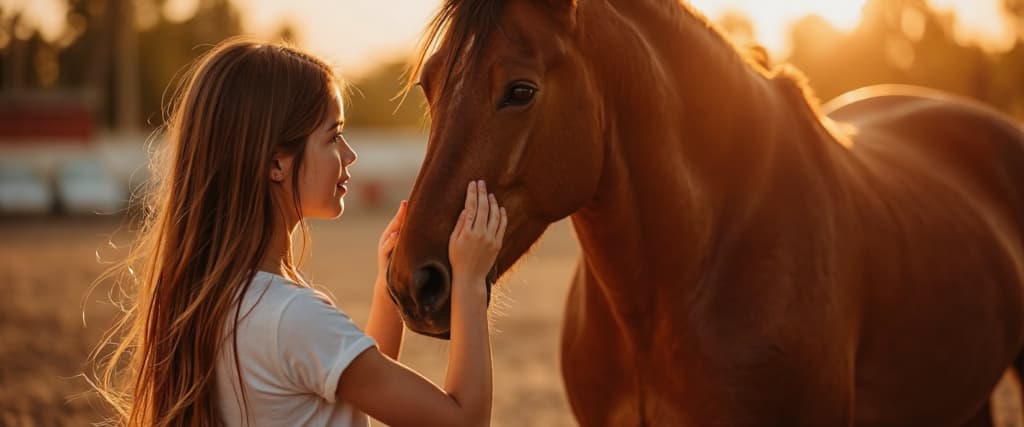
Spending time with horses can have surprisingly powerful effects on our emotions and behavior.
People often find that they not only feel calmer and more confident, but also more capable of building trust, solving problems, and handling impulses in everyday life.
Whether it’s a child learning empathy, a young adult gaining self-esteem, or someone recovering from stress or depression, bonding with a horse provides a hands-on way to grow emotionally, socially, and mentally.
Positive Activities With Horses and Their Benefits
Grooming and brushing
Brushing a horse encourages calm focus and gentle, rhythmic movement. It helps cultivate patience, responsibility, and emotional awareness. As the person relaxes, the horse often responds by standing quietly, creating a shared sense of calm and trust.
Leading a horse on foot
Walking beside a horse while holding a lead rope teaches clear communication and confidence. The handler must stay present and balanced, as the animals respond instantly to hesitation or tension. This activity supports emotional regulation and self-control.
Quiet observation
Standing at a distance and simply watching its behavior promotes mindfulness. Observing breathing, posture, and movement helps people slow down and tune into subtle details, strengthening attention and emotional sensitivity.
Walking in sync with a horse
Moving at the same pace encourages rhythm, coordination, and body awareness. This shared movement can lower stress and create a feeling of connection without the need for words.
Feeding and hand-offering treats
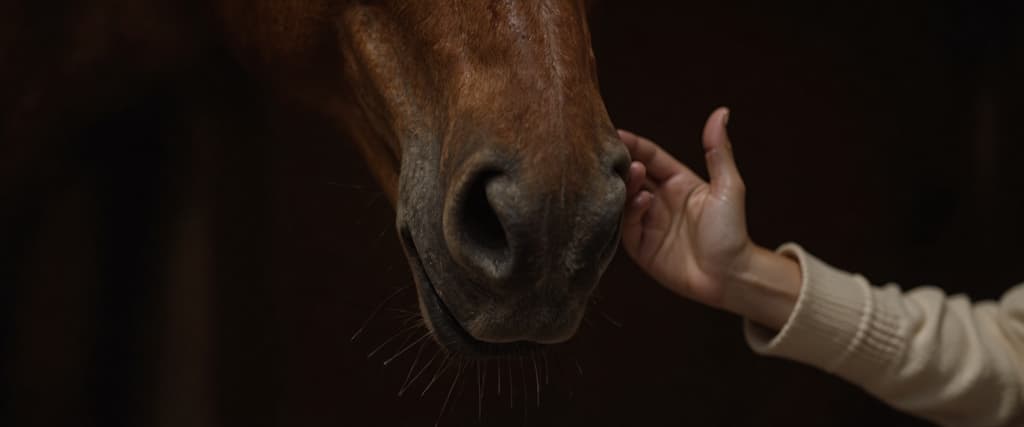
Carefully feeding an animal builds trust and teaches respect for boundaries. The person learns to stay calm and intentional, as sudden movements or impatience can startle the horse.
Stable care and routine tasks
Cleaning stalls, filling water buckets, or preparing feed develops responsibility and structure. These repetitive tasks can be grounding and emotionally stabilizing, especially for children and teenagers.
Ground exercises and obstacle work
Guiding a horse through simple obstacles helps build problem-solving skills and emotional clarity. The horse reacts to clear intention rather than force, reinforcing calm leadership.
Mindful breathing near a horse
Standing quietly next to a relaxed animal while focusing on slow breathing can help regulate the nervous system. Many people notice their breathing naturally matching the animal’s rhythm.
Reflective discussion after interaction
Talking about how the horse reacted encourages self-reflection. People often recognize how their emotions influenced the interaction, supporting emotional growth that can be practiced and developed over time.