HOME   |   SEARCH   |   SITEMAP   |   CONTACT
Certified Horsemanship Association

Standard Instructor Certification Photo Lesson

For group riding instructors dealing with progressive skill building in all levels of riders, both in the arena and on the trail. Certification may be earned in English and/or Western disciplines; minimum age for assistant certification is 16, minimum age for instructor certification is 18. Eight levels of certification may be earned in both English and Western disciplines, ranging from assistant instructor to CHA clinician. Level of certification is the sole discretion of the clinic staff.

  • ASSISTANT INSTRUCTOR: English and/or Western, qualified to assist in a lesson or trail ride, under the supervision of a certified instructor.

  • LEVEL ONE INSTRUCTOR: qualified to provide foundational instruction to beginners, with a strong emphasis on safety and group control; candidates must demonstrate ability in ground handling, mounting, correct position and control at walk-trot.

  • LEVEL TWO INSTRUCTOR: English and/or Western, qualified to improve all aspects of the first level, and progressing through canter/lope, including diagonals, balance of horse and rider, pre-jumping exercises, western patterns, trail riding, etc.

  • LEVEL THREE INSTRUCTOR: English and/or Western, qualified to coach students in improving form, style and understanding of the natural aids, including basic jumping, school figures and leads with a greater emphasis on horsemanship theory and horse care.

  • LEVEL FOUR INSTRUCTOR: English and/or Western, qualified to improve the performance of advanced riders and their horses, including jumping courses, dressage movements, reining, and other performance events, advanced horse management and horsemanship theory.

  • MASTER INSTRUCTOR: qualified in Level 4, both English and Western; highly experienced in a variety of teaching and management situations; recommended to direct horsemanship programs.

  • ASSISTANT CLINIC INSTRUCTOR: minimum age 21; prerequisite of Master Instructor certification and recommendation from a CHA Clinic Instructor; qualified to assist in certifying instructors; MI's recommended as an ACI must apply to CHA for ACI certification.

  • CLINIC INSTRUCTOR: minimum age 25; qualified to conduct CHA certification clinics and certify instructors with assistance from another CHA clinician. To become certifed as a CI, the instructor must first attain ACI certification and then assist at a certain number of CHA clinics to qualify as a CHA Clinic Instructor.

  • » Back to Top


Trail Guide Certification

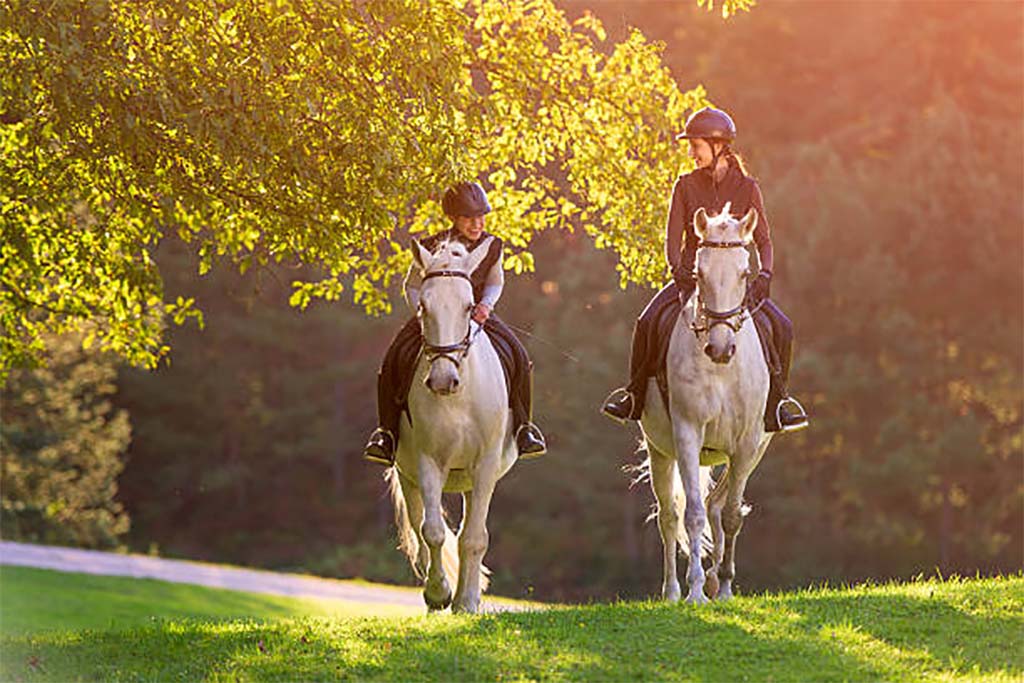
For trail guides dealing with rides ranging from short rides to wilderness packing. Trail guide certification clinics are similar in format and content to the Standard clinic but involve two nights at a base camp and three nights on the trail and includes camping skills, environmental issues and trail ethics. Minimum age for assistants is 16; minimum age for guides is 18; certification may be earned at seven levels. Level of certification is the sole discretion of the Trail Clinic Staff and is determined by skills and knowledge demonstrated during the clinic.Photo of trail ride

  • ASSISTANT GUIDE: qualified to assist on trail rides under the direction and supervision of a certified trail guide.

  • TRAIL GUIDE: qualified to conduct trail rides not exceeding one full day in duration, including securing horses away from the base stable, as might be needed for breaks.

  • OVERNIGHT GUIDE: qualified to take riders on overnight campouts on the program's property, with support from the host facility (does not necessarily use packhorses).

  • PACKING GUIDE: qualified to manage horses and people for longer periods and in camping situations in non-wilderness areas, including simple horse packing and the double diamond hitch.

  • WILDERNESS GUIDE: qualified to manage a riding program and organize and conduct extended pack trips into back country wilderness areas, able to use a variety of packing equipment and tie a variety of hitches.

  • TRAIL ASSISTANT CLINIC INSTRUCTOR: minimum age of 21, prerequisite of Wilderness Guide certification, must be recommended to become a trail clinician by a CHA Trail Clinician and apply to CHA for TACI certification.

  • TRAIL CLINIC INSTRUCTOR: minimum age 25; qualified to conduct CHA trail certification clinics and certify trail guides with assistance from another CHA trail clinician. To become certifed as a TCI, the guide must first attain TACI certification and then assist at a certain number of CHA clinics to qualify as a CHA Trail Clinic Instructor.

  • » Back to Top

Combined Instructor/Trail Guide Certification Clinics

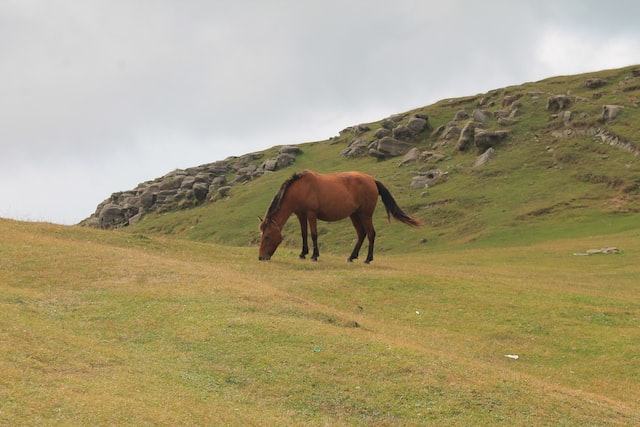
For use in recreational programs, lower level instructional programs and programs that include both progressive skill building and trailriding. Combined Certification Clinics offer both Standard Instructor Certification and Trail Guide Certification, up to the second level in each program. Certification may be attained in both English and Western as a guide and/or an instructor.Photo of horses on meadow

  • ASSISTANT GUIDE: qualified to assist a CHA certified instructor or trail guide on simple trail rides.

  • TRAIL GUIDE: qualified to guide rides not exceeding one day in length.

  • OVERNIGHT GUIDE: qualified to lead supported overnight rides on the facility's property.

  • ASSISTANT INSTRUCTOR: qualified to assist a CHA certified instructor in arena lessons.

  • LEVEL ONE INSTRUCTOR: qualified to provide foundational instruction to beginners.

  • LEVEL TWO INSTRUCTOR: qualified to improve all aspects of Level 1, up to introduction of canter/lope.


Instructors of Riders with Disabilities Certification

For instructors working in programs that provide therapeutic, recreational or mainstream riding for people with disabilities. The materials and curriculum of this certification clinic are specific to the various considerations, adaptations, applications, contra-indications, adaptive equipment and horses used in riding programs that serve people with physical and/or cognitive disabilities. CHA Standard certification is a prerequisite for certification as an Instructor of Riders with Disabilities (IRD). Level of certification earned is based on the candidate's CHA Standard certification, their individual performance in the IRD clinic, scores on written examination, and documentation of experience and other prerequisites. Three levels of IRD Assistant certification and five levels of Instructor certification are available; certification may be earned for physical disabilities, cognitive disabilities, or both types of disabilities at each level. Photo of instructor and student

  • IRD ASSISTANT SIDEWALKER or HORSEHANDLER: minimum age 16, prerequisites: 5 hours of working with people with disabilities (in any capacity), no other certification required. Qualified to assist an instructor certified to teach people with disabilities as a sidewalker or horsehandler.

  • IRD ASSISTANT INSTRUCTOR: minimum age 18; prerequisites: document 5 hours working with people with disabilities (in any capacity), plus CHA Standard Level One Instructor. Qualified to assist in the instruction of riders with disabilities, with an instructor certified to teach riders with disabilities.

  • LEVEL ONE INSTRUCTOR OF RIDERS WITH DISABILITIES (I.R.D.): Prerequisites: minimum age 18; first aid and CPR certificaiton; minimum of 15 hours working with people with disabilities, in any capacity, and 10 hours teaching riding to people with or without disabilities; CHA Standard Level Two Instructor in one seat (English or Western) and Level One Instructor certification in the other seat. Qualified to teach riders with cognitive and/or physical disabilities, up to Level Two horsemanship skills.

  • LEVEL TWO I.R.D.: Prerequisites: minimum age 21; first aid and CPR certification; previous prerequisite hours, plus an additional 95 hours teaching riders with disabilities, for a total of 120 prerequisite hours; CHA Standard Level 3 certification in either seat (English or Western) and Level 1 certification in the other seat. Qualified to teach Level 3 horsemasnhip skills to riders with cognitive an/or physical disabilities and has demonstrated strong knowledge of how to address the required issues inherent within each disability.

  • LEVEL THREE I.R.D.: Prerequisites: minimum age 21; first aid and CPR certification; documented previous required hours plus an additional 40 hours teaching riders with disabilities, for a total of 160 prerequisite hours; CHA Standard Level 4 certification in either seat (English or Western) plus Level 1 certification in the other seat. The IRD Level 3 is highly qualified in horsemanship skills and knowledge of disabilities, and to teach Level 4 horsemanship skills to all levels of disabilities from mild cognitive disabilities to the profound physical disabilities.

  • I.R.D. ASSISTANT CLINIC INSTRUCTOR (DACI): Prerequisites: minimum age 25; IRD Level 3 certification for both Cognitive AND Physical disabilities; recommendation from an IRD Clinic Instructor; previous prerequisite hours, plus an additional 20 hours teaching riders with disabilities, for a total of 180 prerequisite hours; NAHRA Registered Instructor; current CPR and First Aid. Candidates must apply to CHA for DACI status and must take an additional written exam.

  • I.R.D. CLINIC INSTRUCTOR (DCI): Requirements: minimum age 25; receive two recommendations to become and IRD Clinic Instructor, from assisting two different DCIs, at two different facilities; must apply to CHA for upgrade to CI status.

:: Download IRD Recertification Form

Seasonal Equestrian Staff Certification

The Seasonal Equestrian Staff Certification (SESC) was developed to meet the needs of seasonal riding program operators, such as summer camps, youth organizations, guest ranches and trail program operators. The purpose of the SESC program is to provide training and certification for seasonal or temporary riding staff that work under the supervision of a certified instructor or guide.Photo of Conference Attendees

The SESC program is offered only to the riding staff of a CHA Program Member facility that work under the supervision of a Level 2 or higher CHA certified Instructor or Guide. SESC certification is valid only at the Program Member's facility and is a non-renewable certification. The SESC is conducted in 2-3 days and is staffed by one CHA Clinic Instructor (Standard or Trail), who is assisted by the certified instructor on staff at the facility.

SESC clinics require a minimum of 24 hours of clinic time, excluding meals and rest periods. Participants will take a written test of 50 questions on basic horsemanship and safety, will have a riding skill evaluation, will teach two demonstration lessons and attend required lectures on risk management and teaching techniques. At the end of the clinic, the CHA clinician will complete written reports on each participant, which includes evaluation of safety awareness, horsemanship ability, teaching skills and group control.

CERTIFICATION EARNED: Participants may earn certification as Seasonal Equestrian Staff. This certification is valid only at the CHA Program Member facility where the individual is employed or sponsored and enables them to work only under the supervision of a CHA certified Instructor or Guide (Level 2 or higher). Participants will be evaluated according to Level 1 Standard or Trail horsemanship skills. Seasonal certification is non-renewable and expires at the end of the calendar year.

» Back to Top

Skills Clinics

CHA Skills Clinics are single-day or multi-day events covering:

  1. Any topic covered in the Standard Horsemanship or Trail manuals, or

  2. How to teach any topic covered in the Standard Horsemanship or Trail manuals.

All topics taught in CHA Skills Clinics must be of a nature that is generally covered in the Standard Horsemanship, Trail, Combined or Instructor's manuals. Topics such as starting colts, round pen reasoning or specific performance level disciplines cannot be currently covered under the auspices of CHA, since CHA does not currently publish material to support those techniques.

All advertisements for CHA Skills Clinics shall include the content being covered in the clinic and must also include the level at which the clinic is being taught (i.e., Level 1-4).

CHA Skills clinics may be taught by one or more CHA Certified Instructor(s) with a current certification one level higher than the intended levels to be covered in the clinic. The instructor must receive prior approval from the CHA Program Director to staff a skills clinic. This approval will be part of the clinic application process.

CHA Skills Clinics may be conducted at any suitable facility; the site does not have to be a CHA Program Member.

An application to conduct a CHA Skills Clinic shall be submitted to the CHA office and referred to the CHA Program Director for final approval. The application will include:

  • A clinic request form

  • A clinic syllabus including clinic content and information on instructor qualifications

  • A reference from a CHA Clinic Instructor addressing the instructor’s suitability to conduct a skills clinic.

The CHA office will maintain a file on the skills clinics that have been approved and conducted. This file shall contain the instructor’s application material only. There will be no official evaluations of participants or the instructor. The instructor may ask for participant evaluations for their own use and may provide CHA certificates of participation to clinic participants. CHA Skills Clinics may count as continuing education credit for certified instructors enrolled in the clinic.

To register a skills clinic with CHA, the instructor should submit a Clinic Request Form, Clinic syllabus with instructor qualifications and clinic content and a professional reference from a CHA clinician. The CHA Program Director will review the application for approval of the CHA Skills Clinic within seven working days from the date the paperwork is received in the CHA office. The cost to host a skills clinic is $250, which includes CHA insurance and certificates for participants. The clinic fee must be paid upon approval of the clinic.

» Back to Top

Equine Facility Manager

The Equine Facility Management (EFM) program is a twenty-hour certification clinic to evaluate participants on their skills and knowledge of equine facility management. Participants will demonstrate skills and take a written test at each of four levels of certification. Each participant starts at level 1 and may proceed to the next level upon successful completion of each level and may receive up to Level 4 Certification during the twenty-hour clinic.

Certification clinics will be held at commercial equine operations (more than 35 head) that offer a diversity of functions to enable testing the program content through all four levels. Ideal host sites would include boarding/lesson/training operations, trail/dude operations, college facilities, competition centers, breeding farms, etc. 

LEVELS OF (EFM) CERTIFICATION

There are four levels of certification and participants must advance through the levels by taking a written test and doing skills demonstration at each level. Minimum age is 18. Candidates for certification must have the knowledge and skills at any given level prior to the clinic; CHA will not certify newfound knowledge or skills.

These four levels of certification are available:

Level 1 - Stable Worker: Qualified to work in a barn under the supervision of a manager.

Level 2 - Stable Manager: Qualified to manage a small private stable of up to 10 head and 1-2 employees.

Level 3 - Herd Manager: Qualified to manage a public equine facility of up to 35 head and 3-4 employees.

Level 4 - Equine Facility Manager: Qualified as general manger of a commercial equine operation greater than 35 head and with five or more employees.

See expanded content in each level below.

MINIMUM COMPETENCY

For level one EFM certification, minimum competency requires the ability to safely catch, halter, lead and secure horses without assistance; safely execute feeding and stable chores; basic horse knowledge including parts of the horse, signs of health and basic behavior.

AREAS OF EVALUATION

Participants will be evaluated on skills and knowledge by two CHA certified EFM clinicians, in five areas:

  1. Safety

  2. Horse Handling

  3. Horse Husbandry

  4. Facilities and Equipment

  5. Professionalism

The standard clinic staff certification process will apply to EFM.

CERTIFICATION REQUIREMENTS

In order to receive any certification, the EFM candidate must meet the following requirements:

    • Minimum age 18

    • Complete a certification clinic of at least twenty (20) hours

    • Attain a score of 31 or higher on the EFM Evaluation form, with a minimum average score of seven (7) in the safety category

    • An EFM candidate is evaluated on the ability to work safely and effectively in a stable and is evaluated by written tests, oral examination, and skills demonstration.

    • Candidates must pass each level consecutively to attain level-4 certification.

    • Certification is valid for three years from the date of certification and individuals must maintain membership in CHA.

    • Recertification is possible by application and proof of continued activity in the horse industry and at least 25 hours of continuing education.

    • The only way to raise the level of EFM certification is to attend another certification clinic. Participants must wait a minimum of six months after an EFM clinic to attend another EFM certification clinic.

PROGRAM CONTENT

The following skills/knowledge will be demonstrated at each level, by either a written test or a hands-on skills demonstration, oral examination.

  1. Stable Worker: safe horse handling, stall cleaning, turn out, feeding, parts of the horse, signs of wellness and sickness, securing horses.

  2. Stable Manager: basic equine nutrition, horse first-aid and wound care; vital signs; routine health maintenance; grooming and bathing; bedding and manure management; hoof care; bandaging and protective boots; animal welfare.

  3. Herd Manager: resource management (facility, equipment, supplies); scheduling staff and programs; risk management; stallion/broodmare care; pasture management; infectious disease control; record keeping; medications and supplements; personnel management; environmental impact; communication skills; herd nutrition; saddle fit; emergency procedures.

  4. Equine Facility Manager: business and personnel development; budgeting commercial operations; strategic planning; policies and procedures; employment law and payroll; insurance; communication skills; people skills; conflict resolution; federal regulations (CAFO); animal welfare; show grooming and clipping; horse selection and evaluation; staff training; disaster planning.

CLINIC SYLLABUS

CLINIC LENGTH: 20 HOURS; suggested 2 ½ day weekend clinic

PARTICIPANTS: maximum number of participants is 8; minimum number is 3; two EFM clinic staff required

MANUALS:

  • Horses, Third Edition, by J. Warren Evans

  • CHA Standards for Group Riding Programs

REQUIRED PAPERWORK :

  • CHA Health form

  • Application for certification

  • Resume form

  • Clinic Summary

  • EFM Evaluation form

  • CS Reports

CLINIC REQUIREMENTS

  • Required Seminars- Introduction to CHA and the clinic process; Site Orientation; Risk Management

  • Written tests- participants will take a 50-question test (T/F, multiple choice, short answer) for each level. The written test will precede the skills demonstration and a minimum passing grade of 70% is required to attain that level of certification.

  • Skills Demonstration- each participant will be assigned a skill from the skills list for each level and a horse with which to demonstrate the skill (i.e., safely securing horse with quick release knot, take vital signs, wrap legs in standing bandages, etc.). Each skill in the skills list for the level will be demonstrated, and participants may have to demonstrate more than one skill in the level. Once the participant has demonstrated the skill, the clinic staff will verbally evaluate and may ask questions of the participant. The group will be asked for comments but are not required to evaluate. Those participants striving to attain higher levels of EFM certification are encouraged to evaluate or comment after each skill demonstration.

  • Exit Interviews

SAMPLE CLINIC SCHEDULE

FRI 6:00-10:00 pm

  • Welcome, paperwork

  • Intro to CHA and clinic process

  • Site orientation

  • Risk Management

  • Level 1 written test

SAT 8:00 am – 5:00 PM

  • Level 1 skills demos

  • Level 2 written test

  • Lunch

  • Level 2 skills demo

  • Level 3 written test

  • Level 3 skills demo

SUN 8:00 am – 5:00 PM

  • Level 4 written test

  • Level 4 skills demo

  • Lunch

  • Clinic staff writes evals

  • Exit interviews

  • » Back to Top

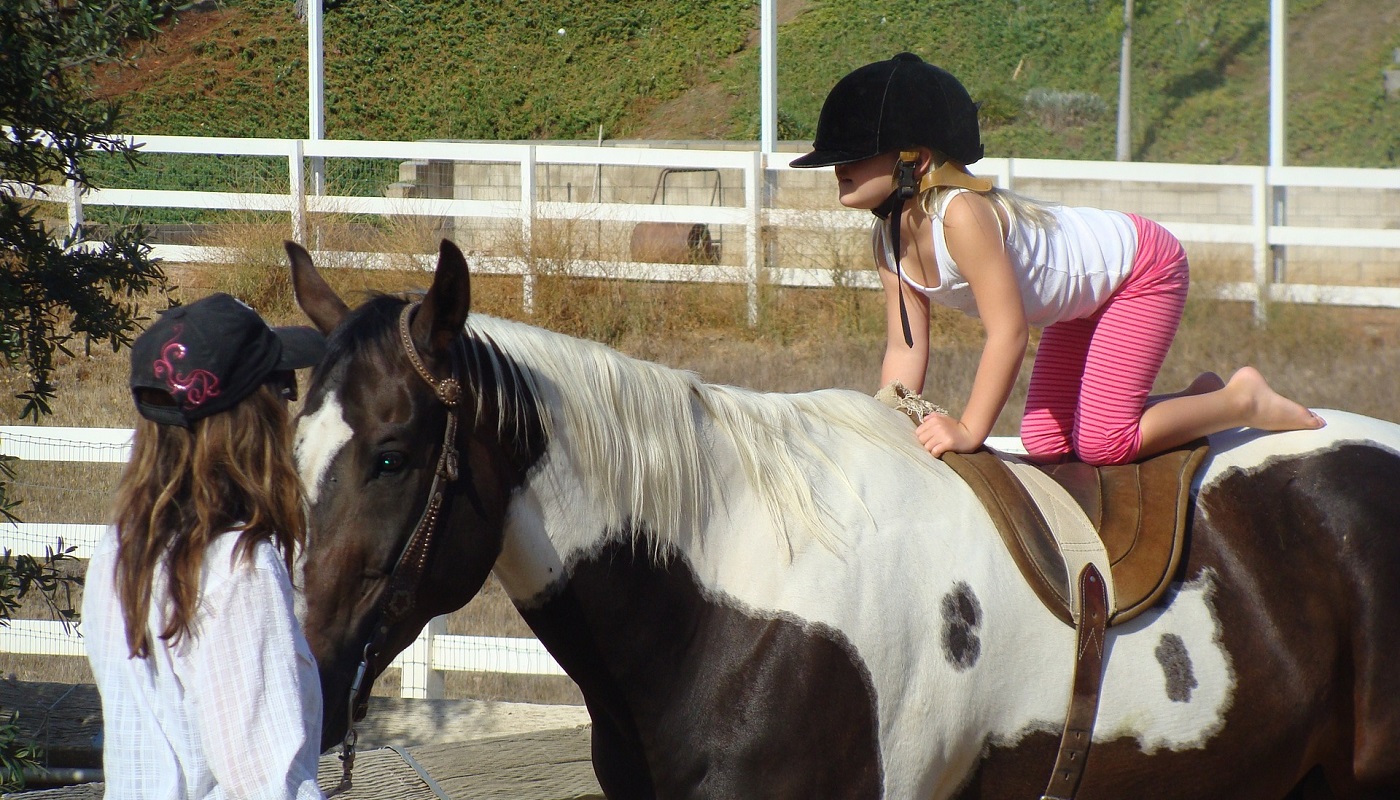
Recreational Vaulting Certification

Vaulting is the art of gymnastics on the back of a moving horse. It is one of seven equestrian disciplines recognized by the Federation Equestre Internationale (FEI) for international competition and its history dates back to Roman times. It has been an important part of equestrian training, especially cavalry training, for generations.

Vaulting is gymnastics in harmony with the moving horse. As a competitive sport it is stylized and disciplined. As a recreational activity and teaching aid it is enormously adaptable in scope and application.

Vaulting is a safe sport as the horse is under the control of an experienced horseperson and it is performed in a very controlled environment. All exercises are done on a vaulting dummy before moving on to the horse.

Vaulting requires the teamwork of the vaulter, horse & longeur. Vaulting may be done as individuals, pairs or as teams. It is an equine activity that can provide INSTANT SUCCESS – vaulters may be doing compulsory exercises on the horse in their first lesson.

Vaulting is a specialized horse activity that is FUN. It improves confidence, balance, timing, strength, and suppleness, thus making participants’ better, more secure horseback riders. Since one vaulting horse can address the needs of many vaulters, it is a great way to offer equine opportunity to many participants.

Vaulting diversifies and enhances any horsemanship program, both for able-bodied and disabled equestrians. A growing number of riding instructors, schools, camps and therapeutic programs are using vaulting to improve their students' skills.

To learn more about the sport of vaulting visit the American Vaulting Association web site at www.americanvaulting.org


How Can Vaulting Fit Into My Current Riding Program?

Lesson Program: Many stables choose to develop a complete vaulting lesson program as an adjunct to their riding program. Others use vaulting techniques on a more limited basis, individualizing their vaulting instruction to address specific rider challenges (build confidence, increase understanding and feel of horse movement, create awareness of rider body position / muscle isolation and its effects on the horse, etc.).

Camp Program : Vaulting is a fun addition to a camp program as it provides opportunities for team building among campers, channels their energy into a positive learning experience, and expands their confidence and sense of accomplishment in a short period of time.

Youth Association or Club: Vaulting provides an exciting challenge for club members to work together while improving their horsemanship skills and equine knowledge. Whether vaulting is used for clinics, demonstrations or competitions, it allows for diversity in rider/vaulter skills, horse breed or use, and economic level of the participant.

Therapeutic Program: As vaulting allows for great variety in rider positions and movements, it provides an excellent way for therapeutic students to set and achieve goals while increasing their strength, flexibility and balance. With options for individual or team efforts, vaulting offers unlimited opportunities for physical and social development.


About CHA Recreational Vaulting Coach Certification

The goal of the Recreational Vaulting Coach (RVC) certification clinics are to provide the vaulting community a certification process through which participants may be evaluated in their skills as coaches to provide a safe, enjoyable and effective beginning vaulting program.

Certification is available as an assistant coach or as a level one or level two coach. Certification will qualify an individual to assist a certified coach, to coach vaulting at the walk/trot in a camp setting, a recreational vaulting program for non-competitive vaulting experiences or for a program offering vaulting for riders with disabilities.

A candidate desiring to attend a RVC clinic for coach certification must be a member in good standing with the AVA.

  • Auditor hours are available with no prerequisite and are designed to provide basic information for those who will be working under the direct supervision of a certified vaulting coach. Auditing is open to anyone who is interested in learning more about the sport and is an excellent introduction for anyone considering starting a vaulting program. Auditing is recommended for parents who may be helping to supervise vaulters during a vaulting session. Auditing participants attend the regular coaching certification clinic and a certificate of completion is issued.  

The RVC clinic is two and a half days long and is held in conjunction with a Standard, Combined or Disabilities clinic or may be held as a stand-alone clinic. RVC clinics are held in conjunction with many CHA Regional Conferences and also at the International conference.

  • During the clinic a participant will be asked to teach a minimum of two lessons on the barrel and then on the horse, longe and serve as spotters as well as attend lectures on safety, risk management, selection, training and care of the vaulting horse.  

The RVC is conducted by two CHA RVC Clinicians, whose job it is to evaluate the coaching skills of each participant and offer constructive advice for a safe and effective vaulting program. The level of certification granted, if any, is at the sole discretion of the two CHA clinicians conducting the clinic.

RVC clinics will be held at sites approved for hosting by the CHA Program Director, Polly Haselton Barger, and in addition to the regular host site requirements; the host site needs to offer safe and suitable vaulting areas, equipment and horse, as stated in the American Vaulting Association (AVA) Camps and Club Manual. For information on hosting a RVC clinic, call 800-399-0138 or email pbarger@CHA-ahse.org.

» Back to Top

Driving Instructor and Driver Certification (DIDC) Form

For driving instructors who teach group lessons in the camp or commercial driving school setting, and for recreational or commercial drivers. Certification includes single and team driving with multiple vehicle types. Both breast collar and collar harness are addressed. There are several workshops included in this clinic including Teaching Techniques for Driving, Risk Reduction, Passenger Safety in Loading and Unloading, Harness Fit and Adjustment, Road Driving, Emergency Procedures and Professionalism. Minimum age for Assistant is 16 years old, minimum age for driver/driving instructor is 18 years old.

  • Assistant Driver/Instructor: Qualified to assist a certified instructor or driver including grooming, harnessing, ground driving and heading.

  • Level 1 Driver: Qualified to drive single or pair recreationally on private property or in an arena; qualified to hitch and unhitch single or pairs, including fitting and adjusting harness and vehicle safety checks.

  • Level 1 Driving Instructor: Qualified to teach recreational driving on private property, both single and pairs.

  • Level 2 Driver: Qualified to hitch and drive single or pair on street or roadway, including ability to correct horse behavior problems, understanding of selection and suitability of driving horses, knowledge of hoof care and common health problems.

  • Level 2 Driving Instructor: Qualified to teach driving on public roads, selection and suitability of driving horses, correcting horse behavior problems, hoof care and common health problems, conformation, lateral and longitudinal alignment, bits and safety equipment.

  • Assistant DIDC Clinic Instructor: Minimum age 21; prerequisite of Level 2 Driving Instructor certification and recommendation from a CHA Clinic Instructor; qualified to assist in certifying drivers and driving instructors; Level 2 DIDC Instructors recommended as an ACI must apply to CHA for ACI certification.

  • CLINIC INSTRUCTOR: Minimum age 25; qualified to conduct CHA certification clinics and certify drivers and driving instructors with assistance from another CHA clinician. To become certified as a CI, the instructor must first attain ACI certification and then assist at a certain number of CHA clinics to qualify as a CHA Clinic Instructor.

Watch for upcoming Adjunct Certification for Driving Multiples!

» Back to Top